Showing posts with label American teaching in Japan. Show all posts

Tuesday, October 14, 2014

Takayama Matsuri


The shrill trill of flutes, ancient yatai, and the greasy smell of festival food all competed for my attention. I had been looking forward to this festival since we arrived in Japan.  

The story goes the emperor of Japan hired carpenters from Takayama to build his palace, as they were the best woodworkers in all of land. And though they built his beautiful home, they were still required to pay heavy taxes. Unhappy with this state-imposed robbery, the carpenters melted all of their money into gold leaf, traded their skill for silk, and made the most beautiful yatai in all of Japan.   

And yet, something about the festival, like much of Japan, is an unspoken bond between the ancient and the modern, (another contradiction for my regular readers). In the states, there are no festivals like this, no ancient rituals to the gods. In the states, people crowd around to see musicians play guitar, while at the Fall Festival, they crowd around to see puppets. And when the puppet fails to swing out to the last rung of the monkey bars, a man in a hood carefully moves it, strings be damned, and the crowd giggles at this failure of ancient technology and snaps pictures on their cell phones.

The old and the new blend together seamlessly in japan. Even the crowd seemed a mix of the centuries; there were tiny children and doting grandparents, uniformed teenagers daring each other to dip their toes in the river, Tokyo fashionistas in too-high heels, and Europeans crowding around the only gyro stand in all of Takayama. Though we were all there ostensibly for the yatai, I think that we, like people throughout the ages, truly enjoy festivals for the food.

This is what my students told me after all. “The best time to go is 10am.”

Really? Why’s that?

“That’s when the food stands open.”

The food was also part ancient tradition and part modern artifice. I, being the foolish foreigner that I am, headed straight for the enormous spiked sea snails an elderly man was grilling. Shocked that I wanted one of these horrifyingly large mollusks, he carefully picked a juicy one and handed it over with a tiny wooden spear for me to gore it with. I wandered off, cradling my meal and looking for my wife. I founder her grinning ear to ear as she held a big, round orange and sucked the juice from it. Drinking orange juice straight from the orange looks like something traditional, but it requires a specialized blender to liquefy the fruit’s insides and not damage the peel. The ancient and modern blended yet again. Eager to show her up with my far more bizarre festival fare, I speared my snail’s firm flesh and took a bite.

It was the most disgusting thing I have ever eaten. Ever. I am not one to be squeamish. I dine on all manner of sea creatures, from unagi to urchin. I’ve eaten cartilage, raw scallops and garden snails by the bucket. I once slaughtered a guinea fowl only to dine upon its heart and gizzards. So I think I’m more adventurous than some (certainly than my wife, who thinks a cucumber on a stick is the epitome of exciting food) but this sea snail was horrible. It was bitter, bitter as the smell of burnt matches. It was huge and impossible to tear apart with my teeth. I’ve had snails before, and always the intestines are removed, but not for this guy. As I gnawed at the snail’s flesh and attempted to force it down my throat, I saw centimeters of curled up blackness approach my mouth. It was too much. I spit it out, ashamed of my shortcomings, and begged my wife for a drink of orange juice.

I gave up on traditional food after that. I queued up with the Europeans for a gyro, bought a bag of tiny pastries that are somewhere between a baked donut and a funnel cake, and a skewer of delicious hida beef. The gyro was strange, the sweets gave me a bellyache, but the hida beef… oh yes. Hida beef is richer than the emperor. Hida beef is succulent rivers of fat between tiny islands of muscle. If hida beef is the solar system, the planets are the meat, and the enormous space in between is grass fed, pampered perfection. Satiated, we went off in search of the parade.

The parade is a fantastic blend of the ancient and the modern. Around a dozen men haul each yatai down narrow Japanese streets. People lined up, eager to see this procession. One man screamed at the rest to get out of the way while a bumbling police officer continued to let cars drive towards the approaching yatai.

Some of the elaborate floats have children perched atop them, some venerated members of the community, but the tallest float had the greatest rider. He perched atop the very tip of the yatai, and did not come down, not even when they tilted the entire structure back on two wheels so they could maneuver it around a corner. He carried a pronged stick, and used it to prevent electrical wires from snagging on elaborate gold sculptures or electrocuting anybody. His presence, more than anything else at the festival, made me appreciate the blend of the ancient and modern. This route has changed little over the years. And yet the festival evolves. It has too. Water damage and theft might have once been the greatest threat to the gods within the floats, but now
this man must ride the yatai to prevent death by electric wire.

And the festival participants take all this in stride. There is no contradiction between the old and the new, no need to silence your cellphone in the presence of the divine. There’s a coexistence between the ancient and the modern here that is as puzzling as it is refreshing. I can see a seven eleven from the temple near my home. Apartment buildings fight rice paddies for space; neither is willing to move, and neither has to. Instead both ways of thought, tradition and progress, grudgingly accept each other and force each other to evolve.

It’s strange and a little unsettling, but it’s beautiful and makes for better festival food than sea snail.
Joe Darris Mitchell lives in Takayama Japan with his darling wife. If you enjoyed this story, why not drunkenly tell your friend about it at the bar, or hit the +1 button?

Read more about Festivals, food, or fun in Japan.

Tuesday, September 9, 2014

Sing Karaoke with your Students


These people got drunk and sang karaoke with his students this weekend. This is their story, only names have been changed.
 
Most of the week, I teach at a public school in the morning. I teach thirty minute lessons to about twenty-five kindergarteners. We sing the alphabet, play vocabulary games and their favorite, ‘TPR’ where we all march around the room chanting, “walking,” or “swimming” and the kids act out the verb. This is a great time for them to follow me and bury their heads in my butt (one kid per cheek). No amount of pleading can dissuade them from this task. They march along, chanting “flying, flying” as their skull applies gentle pressure to my gluteus maximus.

Most classes aren’t like that though. Most classes are at the private school I work for, and take place in the afternoon, once the kids are out of school and presumably tired out from all that butt massaging.

Our school divides the students by age and speaking ability, so most of my elementary students are all within a few years of each other in age, but may speak better English than some adults. As teachers everywhere know, it’s impossible to have a class of truly the same level, and that’s true even in my small classes.

One group has an eight year old, Yuki, who can speak English better than most adults. He’s grouped with the soul of a seventy year old man in the body of a nine year old, Rento-2, who is beyond polite and always perfectly clean, and an eleven year old, Rento-1 (the nicknames they gave themselves) who is one the dirtiest children I have ever seen. I have watched life forms evolve from the stains on his shirt. I don’t think Rento-1’s parents don’t care; I think Rento is proud of his stains. Cleanliness is very important in Japan (you have no idea), yet there’s a popular legend of a samurai who wandered the country, never washing his hair or clothes. I think Rento embodies this legend. He’s independent and not interested in social norms. For example Rento-1 always refuses my stamps--once kids get 100 stamps they get a present. I think he doesn’t want anyone to have anything on him. His stains are his way of showing he won’t conform.

All three of them are good kids, but Yuki’s English is far beyond either of the Rentos. Class consists of me teaching around ten new vocabulary words, then practicing speaking, spelling, and simple sentences. This takes the Rentos (and most students) a few weeks. Yuki never needs to hear a word more than once to memorize it. He spends class time giggling uncontrollably while he absorbs English like a sponge. He can copy anything I say flawlessly, like “Yuki be respectful or you’re not getting any stamps.” Even his grammar is impressive.  A popular question for my students is “what’s your favorite food?” To which they respond, “My favorite food is French fry.” Just that formula can be difficult for them, and we practice it endlessly with different topics, but Yuki will respond with varying phrases like, “I like tomatoes,” or “Sushi is delicious.” He should be bumped up, but considering that he already laughs at a struggling eleven year-old’s pronunciation, it’s probably not a good idea.

If I moved him into Kosuke’s class, Kosuke would probably die. Kosuke is eleven, overweight, and likes reading and French fries. He had a pet bacterium but it died. He told me of his loss by miming pouring out a bowl of water. He is THE master of a Japanese thinking technique in which, if you need to remember something, you sharply inhale over closed teeth. This creates a sound something like the last of a milkshake being sucked through a straw. Charming.

Kosuke is in a class with one other student, Ko, whose disinterest in English rivals my own disinterest in learning Japanese. Ko’s favorite day in class was when one of my other level six students missed her own class and had to come to theirs. Asami almost always wears tank tops (fairly uncommon) and short shorts (unbelievably commonplace), which Ko didn’t fail to notice. “How are you doing?” he asked in English, grinning ear to ear. “I’m tired,” she told him, then asked Kosuke how he was doing. “I’M FINE THANK YOU HOW ARE YOU?” he yelled. Ko didn’t mind asking her about her favorite animals and her hobbies, but Kosuke was glad the next week when things went back to normal.

Normally I teach Asami the same day as I teach two of my highest level students, Despair and Delight. They’re about fifteen, and have impressive English vocabularies, but basically refuse to use them. We finished their textbook, and I asked my coworker what to with them next.

“Ugh, those two, just get them to talk.”

About what?

“About anything.”

I tried for about a month (4 classes) and had to give up. I tried everything. I’d tell stories, offer candy in exchange for words, play games, bring music, I even let them make the curriculum. The curriculum thing worked for one class. They wanted to talk about Life. Great. There’s a lot of material there.

So, what’s important in life?

“Health,” Delight said. Health, and she smiled and nodded like she’d just solved the problem. Delight loves everything. She is oppressively positive. When her friend’s house was damaged from the flood in August, Delight was happy her friend had been able to stay the night with her. Delight wants to work in an airport so she can meet people and practice her English by giving one word directions. She likes Harry Potter, fruit, and playing the piano. She baffles me.

I turned to Despair and asked the same question.

“Purpose,” she said and slumped down in her chair.

Wow! Great answer.

I didn’t know her well yet, and asked the next question without thinking.

What’s your purpose?

She shook her head. “No purpose. Mother has purpose for me.”

Oh dear this wasn’t going well, private lessons are supposed to be fun, not existential probing of the familial structure.

You play guitar right? Maybe art can be your purpose. The two of you can start a band. Ha ha ha…

She shook her head, “I can never be good enough. I am not talented. Music is not my purpose.”

A bold statement for a girl who idolizes One Direction. I’m sure she’s already surpassed their music ability, but that didn’t seem like the right thing to say. I tried to comfort her.

You know, even I don’t know my purpose, many people don’t figure out their purpose until a lot later in life.

Despair shook her head, consumed by the future her mother has planned for her. In the States, that ‘thirty-is-the-new-twenty’ thing works, but not in Japan. As soon as students are in middle school, they’re expected to work incredibly hard to get into a good high school (all of which all require entrance exams) and then either start a career, go to college, or get married. I don’t know which possibility was in Despair’s future, but I know it’s not waiting tables, sleeping until eleven and figuring it all out later.

By the time Japanese students have made it through school and into my adults Intro-B class, they seem to be hard working but happy. They always tell me they’re tired, but that seems to be a respectable way to feel. They are all keep very busy schedules. They all have careers (some more than one, Kirito is a hair stylist and owns a curry and French toast restaurant) and hobbies they’re proud of. The word hobby has always seemed dirty to me, like something you do to waste time, but here, whether your hobby is cycling, boxing or videogames, its talked about with a head held high (it doesn’t hurt that all of those are one person’s hobbies). Some dote on their children, some garden or play volleyball, but all of my students love to drink.

Which brings us back to the restaurant. Ken and Kirito came out and sat across from my boss and me. They poured my beer whenever my glass neared empty, one of the most charming of all Japanese customs. They were drinking shochu, basically Japanese moon shine, and trying to convince me to have some because it wouldn’t give me hangover. Ken was going to cycle up a mountain at four AM, and he was drinking plenty. We stuffed ourselves on sashimi and fried vegetables, then left for karaoke. The karaoke spot our boss liked was full, so he called it a night and the rest of us followed Ken to a snack bar.  

They greeted us warmly, and put a half full bottle of whiskey at our table. I think Ken had previously purchased it, and we just paid for the hostess’s conversation skills and drinking pouring ability. She kept the whiskey coming, and applauded excitedly when us Americans sang “Bohemian Rhapsody” and “Rocky Raccoon.”

Our students say songs in Japanese, and a hit by the Carpenters, but eventually we stumbled out, too drunk to sing. We hailed a cab and explained that, no, we weren’t tourists, and to please take us home. I woke hours later, happy I wasn’t climbing a mountain with the monstrous hangover had. Maybe I should’ve tried the shochu.

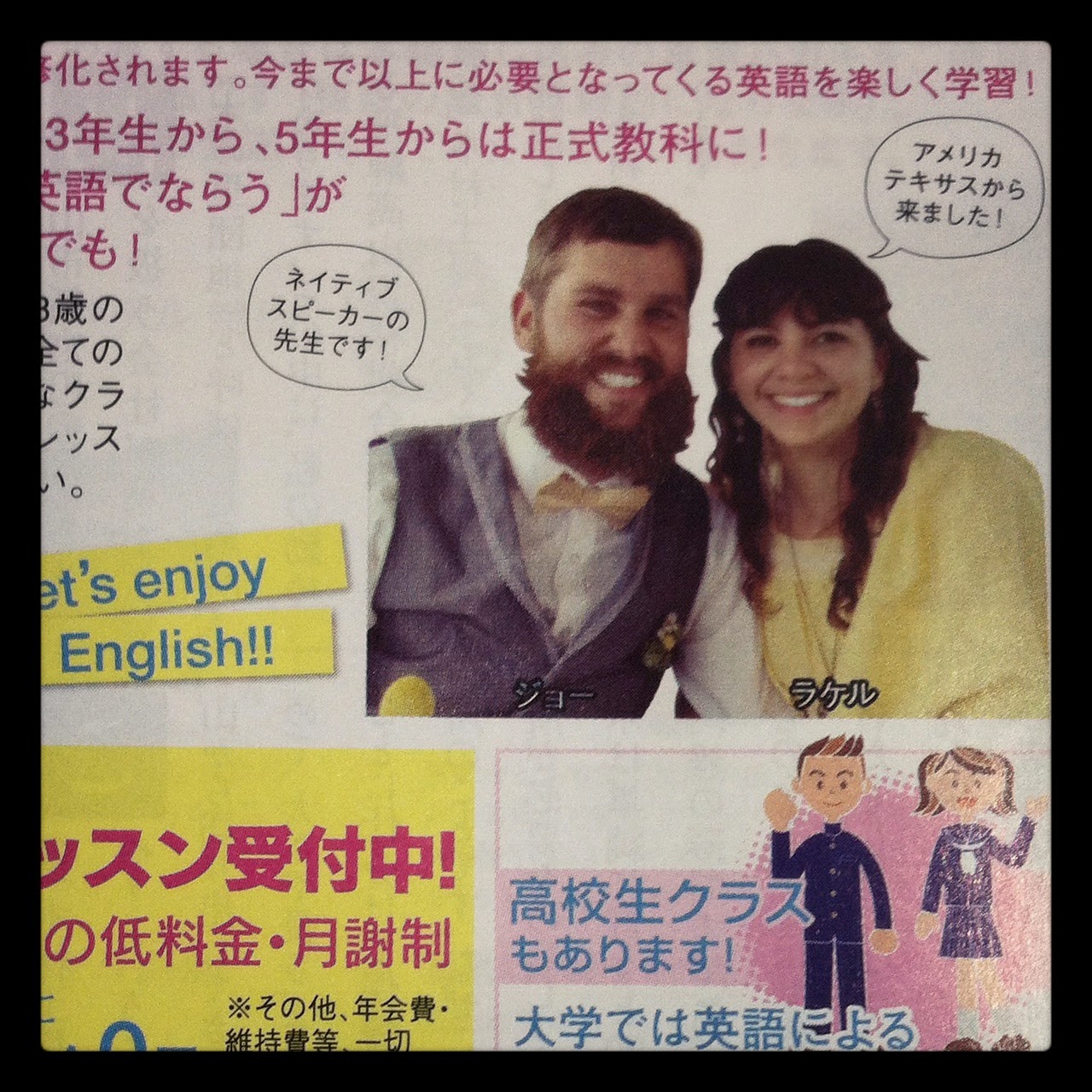
Joe Darris Mitchell lives in Takayama Japan and teaches English. If you want to read more about him teaching, click here. If you want to read more drinking stories, click here forAustralians, or here for Israelis.
Of you enjoyed this post, please +1 and share with those who’d appreciate it!