Showing posts with label American living in Japan. Show all posts

Wednesday, November 26, 2014

I got #2 problems living in Japan


My wife just burst into our living room, furious.
“Did you use the last of the toilet paper?”
I admitted I had and asked, “What’s wrong with the washlet?”
“The drip!” she said and scowled and marched back down stairs.
Toilets in japan are like something out of a science fiction movie, perhaps 2001. They can be either intimidatingly futuristic or unapologetically archaic. The toilet in our house is equipped with an adjustable seat warmer, two flush settings, and a water jet that can wash your ass in three different places with five different power settings. Despite this marvelous piece of technology, my wife still prefers toilet paper.
“It just doesn’t feel clean without it. Plus there’s the drip-dry.”
I am decidedly in the other camp, and see the minute you need to air out as a minute of quiet bliss. I have not used toilet paper in our house since we’ve been in Japan, and am not look forward to digging around my butt crack with thin tissue when I get back to the U.S. of A. It’s unsanitary, ineffective, and a huge waste of resources. The Japanese bathroom experience is superior. They even have a little faucet on the back of every toilet, so you can rinse your hands with the water that fills up the toilet tank. Not that you need to, because you don’t have to worry about getting shit underneath your fingernails.
That is, if you’re at home.
Taking a dump in public takes far more courage. Some toilets are the sleek futuristic models, but most are barely a step up from a latrine, just a trough in the ground with handles to hold on both sides. You’re not even supposed to face the door, you’re supposed to squat facing the wall, while the guy in the stall over sits atop a porcelain throne. I have no idea how a people so accustomed to a robotic butt butler can transition to keeping their balance while their cheeks dip so precariously close to cold porcelain.
What’s worse is that the food in Japan is far from fibrous. I was eating the hipster veggie diet when I lived in America. Kale, chard, and spinach, all from our garden, with a healthy dose of brown rice (sounds fibrous to me) and the occasional bowl of raisin brain. Now I eat primarily raw fish, white rice and miso soup with a single leaf of seaweed. This means I’m far from regular, so when duty calls, I make for the nearest bathroom for fear of losing my golden opportunity.
I’ve been lucky. Normally I can just clench it and wait the guy in the good stall out, but all good things must come to an end.
I might’ve lasted longer if my know-it-all friends Tam and Cole weren’t in town from the States. After three days of their badgering about the toilets, I found myself above the only vacant trough. Their words of wisdom raced through my head. “Dude western style toilets cause you hemorrhoids,” “Yeah man pooping in a squat gives you a more complete poop.” On and on, as if they’d lived here for years. Still I found strength in their words, gritted my teeth, and grabbed hold of the railings so as not to lose balance. It went successfully. I told my friends and they looked shocked. “Whoa, like, how was it?”
What do you mean how was it? You were just singing its merits!
“Yeah but like, I’ve never used one.”
Goddamn know-it-all Americans. But at least they give me courage while I dangle above the squat toilet that has haunted me the most, the one at work. I would think that an English language school of all places would have a western style toilet, but of course that’s asking too much in this paradox of a country.
So I squat, and I shit, and I miss my Washlet and its multitude of features. I don’t care what my wife says. I’ll take the drip-dry and a newspaper over a deep-knee bend any day.
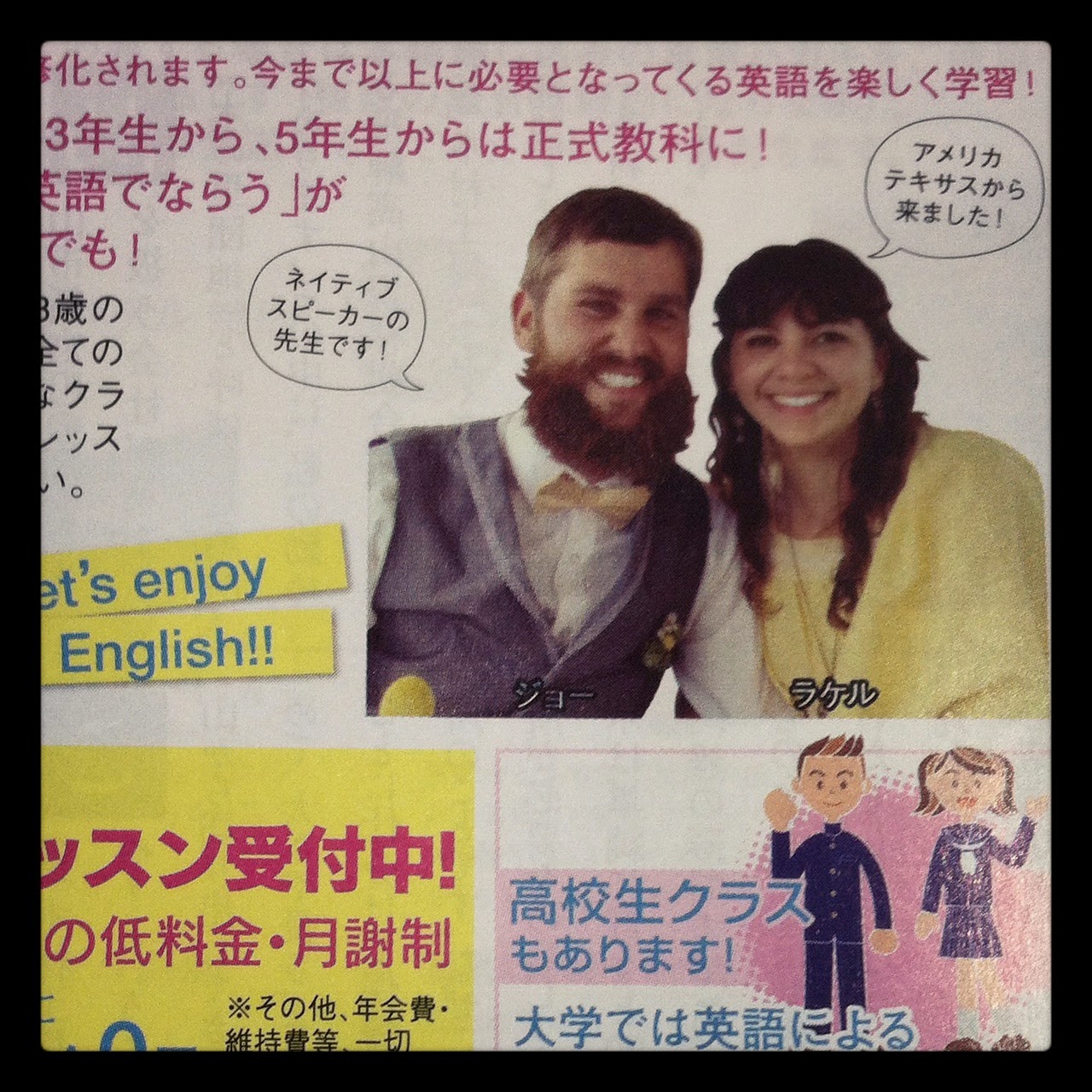
Joe Darris Mitchell lives in Takayama Japan with his beautiful and patient wife. He would like to apologize for the potty-humor, but can't promise it won't happen again. If there's something you'd like to know about being a foreigner in Japan, say so in the comments!

Tuesday, November 18, 2014

Desolation Row


Kensei is the coolest man in in the world
He wears Texas Tuxedos without a trace of irony.
He’s on the cover of the local magazine.
His title says “Rock” Division on his business card.
He puts whiskey in his coke just for the flavor.  
He runs the greatest bar in Japan, called Desolation Row. A great name, made better because inside you can hear anything ever sung by Bob Dylan, down to the bootlegs.
After all, Kensei is the coolest man in the world.
Desolation Row overflows with vinyl. If it rocks, Kensei’s got it. I’ve cheersed beers to more American classics than I’ve ever heard in bars in the states (no Lady Gaga for Kensei, ever.) His favorite (obviously I hope) is Bob Dylan, but I’ve listened to the Boss, Tom Waits, Muddy Waters, and my personal favorite, Earl Scruggs. That Kensei has Earl Scruggs is not unusual, but that he has my favorite record, The Kings of Bluegrass is what sets him apart from anywhere else I’ve ever been. And when my friend Alex asks to be the DJ and exclusively plays the Beetles and Bluegrass so the two of us can dance behind the bar while Kensei refills our Jack Daniels, Kensei does so with a smile and a nod of his head.
But its not just the drunken parties that make Desolation Row so great. The space itself is beautiful in a hole-in-the-wall kind of way. Most of Desolation Row is filled with the bar itself: a six inch slab of an ancient Japanese tree. Ask Kensei about it and you’ll find that though it weighs a ton, it traveled to Desolation Row from Kensei’s old bar, a herculean feat Kensei probably did with ease. Handmade shelves are crammed with vinyl and CDs. The back of the bar is a cozy space that features a Botsudan, a traditional Japanese shrine for dead ancestors, but don’t worry, Kensei got it purified before he got it put in his bar. You can normally find the tourists lucky enough to find their way down to Desolation Row clustered around it, because having something like that in a bar terrifies the locals.
The locals tend to crowd the bar and pick Kensei’s brain. Kensei knows all, from American Western movies to the best hidden bars in Kyoto, not that you’ll be able to find them, because you’re not as cool as Kensei.
Kensei is the coolest man in Japan.
 
 
This weekend I had the honor of seeing his personal library. Kensei mentioned it once and I’ve been hounding him since. HE agreed to take me on Sunday, even though we’d harassed him to opening his bar the night before and demanded free beer for having to wait. Still, Kensei met my wife and I near the city library, a place I would find had less than half of the English selection of Kensei’s collection. We strolled towards the temples in Takayama and found his library nestled above a babbling creek, hidden beneath beautiful maples on an ancient road once home to the famous carpenters of Takayama. He ushered us across his personal bridge with a laugh, then revealed the contents of his library.
 
The fact that I could only read a tenth of the books in no way took away from the experience, for his English selection would take years for me to read. Capote, Steinbeck, Toni Morrison, Joyce, King, Dickens, Austen, Wells, and more, all crammed together between thousands of Japanese books. I filled a bag, then topped it off with a few classic Hollywood western movies and was then was bestowed his favorite book. Bob Dylan’s autobiography, Chronicles: Volume one.
“It starts when he’s a kid, but kinda jumps around when he gets to New Orleans, not in sequence you know? It’s a good book.”
Of course that’s his favorite book. Kensei is the coolest man in the world.
And of course Kensei will know more about classic everything than I ever will. I was lucky enough to see his library, an experience I found he hasn’t shared with many, and an experience I will treasure forever (or until I finish my bag of books and beg to return).
But Desolation Row will forever be my favorite place in Japan. Stop by if you come to Takayama, I’ll be the guy with a beard not making room for you at the bar, after all there are chairs by the Botsudan, and I got some books to discuss.
Joe Darris Mitchell lives in Takayama with his wife, who Kensei likes more than him anyway. If you enjoyed this story, read more about parties at Kensei's, or come see us at Desolation Row

Wednesday, October 29, 2014

Bromance on Ontake

Mt. Ontake recently erupted and still smolders.
We climbed a volcano close enough to Mt. Ontake to see the smoke rise from the recently erupted volcanic sister. As the tour bus rounded a bend in the road and the plume of smoke appeared, the passengers all gasped and shamelessly snapped pictures. I was sitting next to Raquel and a seat over from the other half of a budding bromance. Had I known that the proposal would lead to undressing and bathing with fifty other Jpanese men, I might not have accepted the offer to climb Mt. Norikura. But I didn’t know where this bromance was going to take me, so away we went.  
I am no stranger to the bromance. I’ve had them start in high school classrooms from shared chuckles or in a bus when a bearded man noticed I was reading his favorite book. My most recent bromance began at work when a coworker mentioned he had nine pets at home. I simply had to know more! I typically think of bromances as two men try to feel eachother out to see if there’s more than just sparks and if a true relationship can be kindled. Sometimes a bromance blossoms into something longlasting, but what happened with Mr. Tomodachi was something different. It was all over so fast, and I have nothing to show for it but memories.
After agreeing to climb the mountain together (We had already forgotten about our wives) we ate a bowl of noodles to build up our strength. Tomodachi-san and I both ate are soup much too fast and were forced to make small talk and giggle while our wives finished their meal.
We set off after that, Tomodachi-san plowing ahead and me trying to keep up. We’d wait for the women ever so often, I’d snap pictures, the women would catch up and with a cry of ‘daijobu!’ Tomodachi-san and I would set off again.
The bottom part of the trail up Norikura is a breeze. It’s all gently rising switchbacks that take hikers past fields of shrunken pine bushes and snow hiding from the end of summer in the shadows of boulders. Tomodachi-san told me he’d once bicycled up from the very bottom of Norikura, the part of the journey where we’d rode the bus. Needless to say, I was impressed.
The trail grew steeper and became little more than a pair of guide ropes framing volcanic gravel and boulders in a jagged line towards the peak. Tomodachi-san never slowed; he only paused to wait for his wife now and then. He told me he was sixty-three and I simply couldn’t believe that he still looked so young.
But you have no gray hair! I exclaimed
He smiled, tickled that I’d noticed.
We reached the peak and snapped pictures of Mt. Ontake on the horizon. We were a little unnerved watching a recently erupted volcano while we stood on its sister, so we headed back down.
We stopped only to have a snack once the trail levelled out. While we ate Raquel spotted a stoat and Tomodachi-san’s wife saw a magnificent bird that only lives in those mountains, but Tomodachi-san and I only had eyes for eachother. 
Back on the bus, Tomodachi-san asked if we’d like to go to an onsen together. I had been looking for an excuse to go to a traditional Japanese bath, and this seemed like the perfect opportunity. What better way to cement a friendship than getting naked together? Raquel was less enthused, but still agreed that at least we’d have genuine Japanese people with us, and there was less of a chance we’d get thrown out for our tattoos.
At the onsen we separated to go to the respective gendered pools. I shucked off my clothes, and Tomodachi-san led me to the showers. I found a stool and a showerhead amongst dozens of other naked men who were all eagerly soaping their pits and rinsing their balls. They all scrubbed with unbridled enthusiasm. It’s taboo to bring dirt into the spring-fed baths, and they’re serious about it. Scrubbed clean, we headed outside for a hot sulfurous bath.
A pool in the crater of Mt. Norikura. Onsen are spring-fed
pools heated by the volcanoes everywhere in Japan.
“Atsui! Atsui!” Tomodachi-san said as he sunk into the steaming water. We soaked in the bath as naked Japanese men gossiped around us. I don’t speak much Japanese and Tomodachi-san didn’t speak much English, so we just sat in silence, enjoying the fall colors and each other’s company. An older patron rose from the pool as we entered. His balls dangled so low I could see them from behind.
After a few minutes I understood why so many men were getting up, shamelessly stretching and moving to other pools. The water temperature and mineral composition of each pool was different. We were in one of the hottest, and it was filled with white mucous-like flecks that made it look like egg drop soup. We ambled over to another pool that was cooler and looked more like ocean water. It was there that Tomodachi-san asked me who my best friend in Takayama.  
I told him it was Kensei-san, the most badass bartender in all of Japan. Tomodachi-san didn’t know him though. He revealed that he knew my boss Iwamaya-san, and seemed relieved that he wouldn’t have to share me.
“Friends?” he asked me, and touched my shoulder.
Friends, I agreed and clapped him on the back.
We finished our soak and headed to the waiting room to meet our forgotten wives. They weren’t there yet, so we sat down and waited.
I went to get tea and returned to find Tomodachi-san laying down, staring up at the ceiling. I laid down too, relaxed by the mineral springs and the warm light coming from the rafters of the hotel.
“Joe-san?” Tomodachi-san asked, and I rolled over to find him staring at me, his head propped up on his arm, like a tween at a sleepover ready to reveal her big crush.
“Today, a secret?” he asked, and put two fingers to his lips to ask for silence. “Iwayama-san” he said, and shook his head no. I was confused, but hadn’t been planning on revealing my intimidate day in the mountains to my boss anyway, so I agreed.
Our wives returned, Tomodachi-san swore them to silence as well, and we parted ways. Though I have his phone number, I can’t imagine actually calling him. But maybe that’ll change the next time I need some fresh air and a good soak.
Joe Darris Mitchell lives in Takayama, Japan with his darling wife who’s his actual best friend in town. If you enjoyed the homoerotic vibe of this piece, you might enjoy grunting with gaijin, if you want more about the natural splendor of Japan, why not find out the insects of Japan.

Tuesday, October 21, 2014

The Horror of the Lion-dancers


A Lion-dancer nibbles the brain of a defenseless child.
This weekend we witnessed the horror of a Lion-dance festival. Thirty beasts moved in unsettling synchronized steps, then turned their snapping jaws on the crowd. Some of the adults offered their own flesh, but the most delicious morsels, the children, were unwillingly sacrificed to the monsters. Kids watched in mute horror as parents carried screaming children to the jaws of the hungry, dancing lions. Dazed, the children didn’t think to protest until their own parents lifted them and carried them to their doom. They’d scream, punch with their tiny little fists, cry for help, but to no avail. The only escape was through the jaws of one these beasts. The Lion-dancers would nibble at the screaming child’s brains, their parents would laugh and maybe snap a picture, and then the ordeal was over.
Do you want a snack? Parents would ask their traumatized little ones.
I needed this festival. As the trees turn orange, and Halloween approaches, I’ve been feeling a bit homesick. There’s still bags of cheap candy in the stores in Japan, but everyone assures me that, no, there will be no trick-or-treaters. I always hiked miles as a kid, jacked on high fructose corn syrup, daring my friends to go grab candy from the abandoned house with a strobe light flashing eerily, only to pee my pants as a masked killer rushed us from the hedges. Later, too old to trick-or-treat I dressed as a scarecrow on my front porch and grabbed unsuspecting victims or simply hid inside the door, waiting for the perfect moment to strike as my wife doled out candy.  So alas, I was quite sad I wouldn’t get to scare any children this year.
 
It seems that duty lies with the Lion-dancers.
My first experience with the Lion-dancers was at the kindergarten where I teach. The teachers stopped class and dragged the kids out to playground while the principal locked the doors to prevent the kids from hiding in the building. Six men came out, dressed in traditional Japanese garb. They played an eerie melody on shrill flutes that wormed its way into my head. One child was already crying, and soon the whole school was sobbing. They knew what was coming. Only I was ignorant of the terror.
The Lion-dancers made their entrance. As for costumes, I’ve seen far more convincing at Haunted Houses. A Lion-dancer is obviously two men, a sheet, and a red lion/dragon/dog mask with a moveable jaw that one of the dancers snaps in time to the music. The Lion-dancers hopped and their jaws snapped to the beat. The kids tried to scoot away, but their cruel teachers, (myself among them) didn’t let them.
“They’re just people,” I cooed in a foreign tongue.
Then the Lion-dancers rushed forward. The kids ran. Teachers stopped as many as they could. I managed to snag a few and held them down as the Lion-dancers approached, jaws snapping. We took turns dragging the kids forward towards their hungry jaws. The Lion-dancers would politely nibble each child’s skull--melting them into a sobbing wreck--then abandon them for their next victim.
I actually had to teach them English after this traumatizing experience. The kids looked like hell. Their hair was tangled, their clothes dirty from running and falling in the path of the Lion-dancers. They sang the alphabet through tear streaked faces. They needed a nap or a stiff drink.
I told this story to one my most gifted students and she explained the horrific custom. A bite from the Lion-dancers bestows wisdom, so schools hire them to terrorize the children and parents drag their children to festivals to be bitten. Lion-dancers were soon going to visit her high school and she doubted she’d be able to face them. When she was little, a Lion-dancer came to her door and chased her through her house until it cornered her under her bed. Her parents dragged her out and offered their screaming child to the monster. This student is seventeen years old and she’s still terrified of the things. The terror of the experience must be proportional to the intelligence bestowed, because she’s one of my brightest students, and I have heard no story more terrifying.
Back at the festival, the Lions left and were replaced with a slow procession of children. They moved
The young samurai of the festival
across the stage in a hypnotic dance. There were tiny girls in kimonos, boys with spears, hammers and umbrellas, and samurai. After the trauma of the Lion dance, their performance was relaxing and absorbing. They moved with the surety of tradition, each verse another step in their dance.
These weren’t the same kids whose parents drag them to these festival. These were performers, a part of the festival, perhaps the children of the Lion-dancers. These were the children who made the festival exist, the kids carrying the tradition. But there were only so many of them. The rest were from all over the city, brought here to experience the purest of emotions, terror, and in doing so, perhaps plant the seed of distrust in their parents that would one day grow into full-fledged rebellion and drive them from their homes. After all, they weren’t part of any traditional dance, they were victims of the slaughter. City kids with videogames and ramen noodle shops and no roots to their past, save this one, the one that might drive them farther from tradition than their own terrified parents already are.
But I don’t think it will.

There’s something about terror that transcends culture; people the world over value fear. Be it the Brothers Grimm, Freddy Krueger or Lion-dancers, adults get a sick pleasure from traumatizing their children. Parents, camp counselors and big brothers the world over recognize this. Some part of us wants to be scared, that’s why we ask to hear ghost stories and to see scary movies. Fear awakens something in us, something primal, but perhaps it must be balanced by silly masks and obvious costumes, so we can still sleep at night in a house with the true masters or terror: our parents. 
Joe Darris Mitchell lives in Takayama Japan with darling wife, and looks forward to carving pumpkins and handing out candy despite the lack of trick-or-treaters, damn it. Read more about a genius Japanese students, or other weird Japanese festivals. And please +1 if you liked this story!  
 

Tuesday, October 14, 2014

Takayama Matsuri


The shrill trill of flutes, ancient yatai, and the greasy smell of festival food all competed for my attention. I had been looking forward to this festival since we arrived in Japan.  

The story goes the emperor of Japan hired carpenters from Takayama to build his palace, as they were the best woodworkers in all of land. And though they built his beautiful home, they were still required to pay heavy taxes. Unhappy with this state-imposed robbery, the carpenters melted all of their money into gold leaf, traded their skill for silk, and made the most beautiful yatai in all of Japan.   

And yet, something about the festival, like much of Japan, is an unspoken bond between the ancient and the modern, (another contradiction for my regular readers). In the states, there are no festivals like this, no ancient rituals to the gods. In the states, people crowd around to see musicians play guitar, while at the Fall Festival, they crowd around to see puppets. And when the puppet fails to swing out to the last rung of the monkey bars, a man in a hood carefully moves it, strings be damned, and the crowd giggles at this failure of ancient technology and snaps pictures on their cell phones.

The old and the new blend together seamlessly in japan. Even the crowd seemed a mix of the centuries; there were tiny children and doting grandparents, uniformed teenagers daring each other to dip their toes in the river, Tokyo fashionistas in too-high heels, and Europeans crowding around the only gyro stand in all of Takayama. Though we were all there ostensibly for the yatai, I think that we, like people throughout the ages, truly enjoy festivals for the food.

This is what my students told me after all. “The best time to go is 10am.”

Really? Why’s that?

“That’s when the food stands open.”

The food was also part ancient tradition and part modern artifice. I, being the foolish foreigner that I am, headed straight for the enormous spiked sea snails an elderly man was grilling. Shocked that I wanted one of these horrifyingly large mollusks, he carefully picked a juicy one and handed it over with a tiny wooden spear for me to gore it with. I wandered off, cradling my meal and looking for my wife. I founder her grinning ear to ear as she held a big, round orange and sucked the juice from it. Drinking orange juice straight from the orange looks like something traditional, but it requires a specialized blender to liquefy the fruit’s insides and not damage the peel. The ancient and modern blended yet again. Eager to show her up with my far more bizarre festival fare, I speared my snail’s firm flesh and took a bite.

It was the most disgusting thing I have ever eaten. Ever. I am not one to be squeamish. I dine on all manner of sea creatures, from unagi to urchin. I’ve eaten cartilage, raw scallops and garden snails by the bucket. I once slaughtered a guinea fowl only to dine upon its heart and gizzards. So I think I’m more adventurous than some (certainly than my wife, who thinks a cucumber on a stick is the epitome of exciting food) but this sea snail was horrible. It was bitter, bitter as the smell of burnt matches. It was huge and impossible to tear apart with my teeth. I’ve had snails before, and always the intestines are removed, but not for this guy. As I gnawed at the snail’s flesh and attempted to force it down my throat, I saw centimeters of curled up blackness approach my mouth. It was too much. I spit it out, ashamed of my shortcomings, and begged my wife for a drink of orange juice.

I gave up on traditional food after that. I queued up with the Europeans for a gyro, bought a bag of tiny pastries that are somewhere between a baked donut and a funnel cake, and a skewer of delicious hida beef. The gyro was strange, the sweets gave me a bellyache, but the hida beef… oh yes. Hida beef is richer than the emperor. Hida beef is succulent rivers of fat between tiny islands of muscle. If hida beef is the solar system, the planets are the meat, and the enormous space in between is grass fed, pampered perfection. Satiated, we went off in search of the parade.

The parade is a fantastic blend of the ancient and the modern. Around a dozen men haul each yatai down narrow Japanese streets. People lined up, eager to see this procession. One man screamed at the rest to get out of the way while a bumbling police officer continued to let cars drive towards the approaching yatai.

Some of the elaborate floats have children perched atop them, some venerated members of the community, but the tallest float had the greatest rider. He perched atop the very tip of the yatai, and did not come down, not even when they tilted the entire structure back on two wheels so they could maneuver it around a corner. He carried a pronged stick, and used it to prevent electrical wires from snagging on elaborate gold sculptures or electrocuting anybody. His presence, more than anything else at the festival, made me appreciate the blend of the ancient and modern. This route has changed little over the years. And yet the festival evolves. It has too. Water damage and theft might have once been the greatest threat to the gods within the floats, but now
this man must ride the yatai to prevent death by electric wire.

And the festival participants take all this in stride. There is no contradiction between the old and the new, no need to silence your cellphone in the presence of the divine. There’s a coexistence between the ancient and the modern here that is as puzzling as it is refreshing. I can see a seven eleven from the temple near my home. Apartment buildings fight rice paddies for space; neither is willing to move, and neither has to. Instead both ways of thought, tradition and progress, grudgingly accept each other and force each other to evolve.

It’s strange and a little unsettling, but it’s beautiful and makes for better festival food than sea snail.
Joe Darris Mitchell lives in Takayama Japan with his darling wife. If you enjoyed this story, why not drunkenly tell your friend about it at the bar, or hit the +1 button?

Read more about Festivals, food, or fun in Japan.

Tuesday, October 7, 2014

Cultural Contradictions.


“Does Japan have any contradictions?”
My brother asked me this a while ago. I shrugged in reply, not sure where he was going with this.
“You know like how America is obsessed with freedom but has more people in jail than China.”
Ah yes. Cultural contradictions. Like how Americans spend time and money on their front lawns and then hide inside their homes.  Japan has them in spades. They love nature here, and also everything being individually wrapped (and I mean EVERYTHING. I've opened a bag of peanuts to find bags of peanuts inside.) But the most obvious contradiction is their relationship with gambling.
Ask a Japanese person about gambling and they all say the same thing “Gambling is illegal in Japan.”

What about pachinko? 

“Eh… that’s different.” My boss told me gambling with pachinko works something like the electoral college system does in America, its participation by proxy. If you win at pachinko, all you can do with your tub of ball bearings is trade them in for a Pikachu doll or a tea set. You leave with your doll, confused by the whole experience. Why was it so stressful? Why were there people chain smoking at eleven am? What just happened to your money? But on you way out a man from the small store next door calls you over and offers you a nice stack of cash for your doll. You hand it over and thus, gambled by proxy.
Contradictions are everywhere, and not just perpetrated by the Japanese. Most of the ex-pats here pine for the home they’ll never return to. I'm guilty of this as well. I spent last Saturday with a man from Holland complaining about how lousy the beer is in Japan while we drank delicious shochu- Japanese moonshine- that his wife had infused with sour plums. We always want what we can't have. Maybe that's the contradiction of desire.
Safety is a contradiction in Japan. Japan is a very safe place, but never have I felt more consistently in a state of danger. Takayama is supposed to be very safe, it's not near any fault lines or in danger of being hit by a tsunami, yet they use emergency broadcast speakers every day, a safety feature that would do little to save my English speaking ass. And yet, when Mt. Ontake erupted, less than 30 kilometers away, all my Japanese friends told me not worry, we were upwind from the deadly plumes of ash. Finally, a genuine threat, and for once I felt safe.
There’s even a religious cult (hey that’s what the locals call it) that is centered in Takayama because its perceived safety. They picked a city an island plagued with tsunamis, typhoons, earthquakes and volcanoes, for safety. Maybe they worship the contradiction.  
One of my students, an incredibly gifted girl explained it to me.
“Do you know this place?” she asked, and drew its recognizable roof and the peach atop it. I nodded. It was hard not to know it. The temple is huge and is visible from almost everywhere in the city.
“They believe it is like the story of Noah, do you know it?”
I feigned ignorance and sat in amazement as a Japanese high school student told me a parable from my own culture.
“Noah got two of every animal and put them in his boat . It rained, and everyone died, but Noah and the animals were safe.”
I got chills. I’m not religious, not in the least, but it was amazing to hear a story I'm familiar with told to me by someone who didn’t grow up knowing it. It gave it a certain magic that fairy tales possess. 
“They believe their temple is the boat.”
Wow. Bravo. A perfect parable. Made magical to me because it was told in a foreign land. Contradictions abound.
But what do you think? I asked her.
“Well, Takayama is very safe.”
“Yes, yes, yes but do you believe these people were chosen by god to be safe in their ark?” Hey, its not often you get to talk about metaphysics with a high schooler. She smiled devilishly. This is what she had been waiting for. 
“No. I think they’re just the animals.”

I just set her up for the punchline. This enchanting story of religion and survival was just a rouse, another brilliant contradiction,  made sweeter for involving a familiar ancient religion and the fools that believe it.

Joe Darris Mitchell lives in Japan with his darling wife. If you liked this, why not read more about foreigners or the floods he barely survived?

Monday, September 29, 2014

Raquel Rides God's Wooden Penis


The gyrating yoga instructor knelt and stroked the enormous wooden cock. I adjusted my loin cloth, then took a pull from the bottle of sake and watched in horror as the yoga instructor (penis-priestess?) pulled my darling wife closer and closer to the huge wooden wiener. Raquel shook her head, trying to protest but the cult of the phallus must be appeased!
But I’m getting ahead of myself. I had no intention of wearing a loin cloth and stoically standing around with twenty other scantily clad Japanese men as my wife did gods-know-what to a ceremonial baby maker. That morning we’d watched kindergarteners compete in Sports Day for goodness sake!
Chaba had invited us to this ‘party,’ and sent us a flyer detailing the event. If I’ve ever felt a there’s a reason to learn Kanji, it’s to not unknowingly go to a men’s fertility festival. True, the poster had pictures of shafts of flesh carved from shafts of wood, but I thought the party was just near a penis shrine or something.
Instead I arrived to find the only other American shucking his clothes and slipping on a ceremonial loin cloth.
“Come on Joe, man up! You don’t go to penis party in the woods and not dance around naked!” Steve is nothing if not encouraging.

But he makes a good point. Life is better if you participate. So I purchased a ceremonial loin cloth, declined an invitation to help put it on, and slipped into the tent. I tied the string around my waste, pulled the long rectangle of fabric through my legs, around my manhood, and tucked the remainder of the over the string so the cloth dangled oh-so-eloquently in front of El Torito. 
I emerged from the tent clothed only in the loin cloth, shoes, and my watch. Raquel tried valiantly not to melt into a puddle of giggles. Poor Raquel. What was to come was far more bizarre than any loin cloth. Steve asked how it felt and I admitted it was pretty nice. It’s totally adjustable, so no matter the size of your little guy, he’s comfortable, and standing around in a loin cloth is less awkward when everyone else is doing it. Sure, I was the only guy with a beard, chest hair, or tattoos, and the only other American understood everything they were saying, but hey, I belonged. 
The man leading the ceremony (a bartender in the city park that I’ve bumped into at the grocery store) chanted from the top of the hill and Steve and I marched over to watch Japanese men meticulously tie a five foot penis to a wooden frame. The penis was frighteningly realistic. It even had a crack down the side that resembled a bulging vein. The package secured, we all grabbed hold of the frame and erected the penis into the sky.
We marched up the hill, the leader calling out Japanese sexual innuendos and us responding, Yatai! Yatai! We lifted the penis above our heads, rattled it, shook it, sang to it, and spun it in circles. Appeased, the penis-priest commanded us to march back down the hill. We followed a man twirling fire and the yoga instructor as they danced down the hill, beckoning to the dong.
At the bottom of the hill, we set the five-footer down near a fire pit and got down to the business of drinking. The leader pulled out a huge bottle of sake, took a long pull, and passed it around the circle. The last man spit a mouth full of sake into the fire. The alcohol made the flames burn brighter as he anointed a new, smaller cock with more sake. The bottle was set aside, and we formed a tight circle.
Suddenly we were all bent over, each man facing the barely concealed ass of the man in front of him. Before I had time to understand what was happening, the man behind me passed the three foot model between his legs, and into my arms. I caressed it, gripped it hard, and gave the cock to the ass in front of me. The cock went around and around and we all moved with it, careful to never let it touch the ground as we ceremonially fucked each other’s butts.
The yoga instructor wiggled her hips, cheered the cock on, and at some point dragged Raquel into the circle. We passed the penis around the two women as the yoga instructor danced, and Raquel made sure she kept her hands clapping, busy, and away from the damn thing. 
But alas, her humble protests were in vain.
The leader called for us to stop and we returned the three footer to its rightful place next to the booze. We passed around another huge bottle of sake and chanted “Yatai, yatai!”
Then the chanting stopped. The yoga instructor pulled Raquel to the five foot veined behemoth we’d marched around with earlier. She cooed to it and continued to wriggle her hips as she pulled Raquel down next to it.
“She wants you to ride it.” Steve said.
Thanks Steve, but we figured that one out. Raquel shook her head as the woman tried to explain that it was for strength, and fertility.
“But I don’t want a baby!”
“Don’t worry,” she said, “this ceremony is good for a year.”
Drunk on sake and testosterone I offered my poor wife no escape. Gambare, I told her, do your best.
The only other woman at the festival, a mother with a tiny baby who looked nearly as uncomfortable as Raquel was pushed forward. Like deer cornered by a pack of wolves they looked for an escape. But seeing none, they surrendered and straddled the boner.
The leader called for the old heave ho, and the men all dropped to their knees and grabbed the frame that now held not only a monstrous penis, but a mother, her baby, my wife, and the excitable yoga instructor. I pushed my way next to Raquel, concerned for her safety instead of her embarrassment, and we lifted them all into the air.
They rode the cock as we wiggled it, shook it, and rattled it at the heavens. We briefly set it down and Raquel protested, “I don’t want to ride the fucking penis!” But the gods weren’t yet satisfied, so we hoisted them back into the vagina that is the night sky. There was more shaking, rattling, and a heart stopping moment where the men opposite me didn’t quite lift their side high enough and the riders almost tipped into the fire. We decided to call it quits.
We returned the penis and our sacrificial women to the earth, and I followed Raquel as she scampered off into the night.
The men lit up cigarettes, cracked beers, and put their clothes back on. The die-hards stayed near a fire and continued the ritual: they carved a daikon radish into a penis, danced to house music with a sperm cell, and fed us rice balls as they pointed flash lights in our faces and stared at us without blinking. I was the first man offered a rice ball, and had no idea what to do, so I ate it, unsure if I had just completed a ritual, committed an egregious taboo, or consumed ceremonial semen.
Even at penis parties, I think the old ways are best. I never doubted what I was doing as I hoisted my wife into the air riding that phallus. It was for fertility and strength and was undeniably hilarious. In contrast, the techno sperm dance and rice ball stare off were confusing and uncomfortable. That’s the strength of traditions that last: we keep erecting Christmas trees or penises because it feels right. All that modern stuff is just pissing in the wind.
Chaba offered us lodging in his tent and Raquel looked at me with murder in her eyes. Neither of us wanted to see any of these men in the light of day, so despite not getting any photos, we made our exit.
After all, we had a fertility ceremony to complete. 
Joe Darris Mitchell lives in Takayama Japan with his darling (and undeninaly patient) wife. When he’s not making love to the heavens, he’s a teacher of all things. If you liked this story, read more about Chaba, or cultural acceptable nudity in Japan!

Tuesday, September 23, 2014

Sports Day

Sports day, like many Japanese obsessions, sounds like something Americans should do better, but don’t. Trains, Bar-B-Q and outdoor sports have always meant America to me, but after seeing how Japan does them, I’m reconsidering.

Sports Day is the day when students compete in three legged races while their parents cheer them on. Except that doesn’t really happen in the States. My parents never made it to a Track and Field Day, they had to work and I never told them about it. But in Japan, Sports Day is held on a National Holiday, so parents have no excuse, and happily show up with pop-up tents and sunblock.  

As the resident English teachers, my wife and I were given a second row spot, one table from the principal. The perks were tea, a free lunch, and great seats for the most ridiculously adorable athletic meet I’ve ever seen.

There were sixteen events. Here they are in all their glory.

1.       Relay Race! Nenchu (4-5 year old)
 
 
The kids marched onto the field and broke up into teams. With chants of gambare from the crowd, the race began and the kids ran their little legs off. The parents cheered for the first kid to cross the finish line. White team won, much to the disappointment of the Red Team, but the parents cheered just as loudly for the last racer to cross the finish as the first. Gambare means do your best, and giving up, even in the face of an imminent loss, is unacceptable.   


2.       Hawaiian Dance! Nensho (3-4 year old)

About a hundred tiny children marched out onto the field dressed in different colored garbage bag pants. They wore tiny party hats and bracelets, and Raquel couldn’t stop saying kawai! Or Cute, cute, cuuuuuute! They did their best to dance in time to a Hawaiian surf number (a difficult task, as parents of 3 year olds know). Plenty stared at the clouds and forgot to dance, some stumbled and one fell down and sobbed miserably as he got back up and kept dancing. Gambare little guy. Gambare.


3.       Kenpo Nencho (5-6 year old)

The kids punched the air and kicked invisible combatants in sparkling white gi. But the show got really good when they started doing acro-yoga (I don’t know what else to call it. It’s more complex than human pyramids, but similar. Child stacking?) First in pairs, then triplets, then groups of ten, the kids held each other up higher and higher off the ground. I actually had a student break his arm doing this, and can’t help but think it would never fly in the States. His American counterpart’s parents probably would have sued, and no more child stacking, which is a shame. It is adorable and impressive.


4.       Father Fight! (rough translation)

In a heroic show of masculinity, the fathers of the Red and White teams lined up on either side of the field, and stared each other down over the sleeping bags, buckets, tatami mats, and giant foam ball that lined the middle of the field. The gun fired, and these grown men raced to the junk and wrestled it back to their own side. The fighting was so fierce they tore a hole in the foam ball the first round. Gambare is a way of life here. Seriously. Nobody acted aloof or too cool to try. These men were fighting for their children damnit. Gambare!  (check out the video on my Instagram)


5.       Cheer Off! (all ages)

Two six year old captains faced off leading armies of children. They tweeted on a whistle, waved a flag back and forth, and a hundred and fifty kids copied their moves or clapped to the beat. It was like something out of a videogame. I laughed so hard it hurt.

6.       Grandparents-ball

Grandparents threw balls in nets to score points for the Red and White team. The referee would blow the whistle to stop and none of them would, they all wanted that last point. It was somehow even cuter than the children competing.  (don't believe me? Watch the video)

7.       Father-kid Race

The first half of the track was a three legged race, in which the kids tried to run way faster than their dads and busted their butts, then it switched to a wheelbarrow and finally a piggyback. This was a great one to see the parents look a little embarrassed while the kids looked ridiculously happy.

8.       Torii Practice (Nensho)

Pairs of a boys and girls raced to a miniature Torii gate, made an offering (an oversized cardboard coin), then clapped three times, bowed and said a prayer, a Shinto tradition. One girl didn’t clap or pray, and the boy she was with (one of Raquel's students) refused to run back with her until she performed the obligatory ritual.

9.       Koala Parade (?)

Then came a parade of tiny children that tried and failed to dance to a song about koalas and pandas. Strangely not that cute. The only good part was the one kid who kept trying to escape but kept getting captured by his mom and being forced to keep dancing.

10.   WE ARE VIKING!

A choreographed dance to Disney music. It was the only event titled in English. I’m still confused about what it all meant.

      11.   Relay Race (Nencho)

The teachers chalked a racetrack onto the dusty field. Then a starting line, and lines for the kids to wait. They chalked reference lines on the field between every event, measured with string for perfection. The way they worked was in itself an amazing piece of choreography. Each event had a different set up, yet somehow they never seemed to make a mistake. The older kids took their race seriously, and some were heartbroken when they lost.

12.   Monkey-on-your-Back

Another cutesy race where the parents had to carry the kids in different ways.

13.   Grand Synchronized Marching Band

This was the event I’d been waiting for. The kids have been practicing it for weeks, usually during my English lessons, and I couldn’t wait to see the final results. It delivered. A six year old stood on the grandstand and conducted the rest of the students as they twirled batons, pumped pom-poms and banged their drums. They danced to Japanese versions of Disney songs (again with the Disney?), and theme song to a popular Anime cartoon. It was glorious.

14.   Missing Shoe

Dads had to race to a tarp covered in the shoes of all the children and find their kid’s sneaker while keeping their squirming, one-shoed child safely in their arms and off the ground. It was good fun to watch the little girls spot their shoes before the dads could.

15.   Alumni Tug of War

The graduates of this prestigious private Kindergarten (mostly 6-10 years old) lined up on either side of a pair of heavy hooks and grabbed hold of two thick ropes. To shouts of gambare, they heaved and hauled until Red finally won, and only event remained.

16.   Parent Relay Race

 
This was the event I was really there for. When the vice principal invited me to Sports Day, it was really a ploy to get me to run this race with all the moms and dads. Trying hard is really important in Japan, and its important for the kids to see adults trying hard at silly games they don’t understand just like the kids do. Sports Day was great because the kids got to see their families try just as hard as they did. Whether it was Grandparents-ball, The Missing Shoe, or Monkey-on-the-Back, almost everyone really did try their best, not something I often see in America (Most people won’t even dance at a concert because it might look like they actually care too much). I think the vice principal wanted me to run the relay so the kids could see that everyone tries hard in this world they’re going to inherit, even the silly foreigners. Either that or she was hoping I’d bust my ass on the sharp curves of the tiny track like the English teacher did last year.

With all this in mind, I lined up with the other men.

The women went first. Raquel's sweaty brow proved that she gave her best, but it wasn’t enough. Her team had already lost. I vowed not to let the same happen to mine.

I looked and saw the men around me shared the sentiment. What had been a laughing group of loosely organized guys was now four rigid lines of men donning headbands and stretching. I wasn’t going to be the only one to gambare.

We jogged out on the field. There were maybe twice as many men racing as women. Sports Day definitely had a daddy vibe. Lately the Japanese government has been trying to get dads more involved with their kids and these guys were ready to prove their commitment.

The first heat was off and we were all shuffling forward, crouch stand, crouch stand. Finally it was my turn. I ran my ass off. The men behind me was starting to gain, and I threw my legs into overdrive. I didn’t fall on those tight dusty turns, but I came close. I passed the baton and sat down with a bunch of other overly sweaty men. There was no doubt, we’d done our best, and we all congratulated each other as the rest of the men ran their lap. You can watch a video on the joquellives YouTube channel (soon)

And when White won the trophy at the end of the day, I basked in the victory because I knew I had given everything to the silly little race, and I saw that the losers wondered if they couldn’t have given just a little bit more. Giving your best makes victory sweeter, and loss no less bitter, something the States needs to remember. There wasn’t a “good-effort” trophy for every kid on the field, just one big one for the captain of the White Team, and a smaller one for the Captain of the Red, and they don’t even get to take them home. They stay at the school to remind everyone to gambare and maybe, if they work hard enough, they can hold this sweet, sweet trophy while their parents, friends, and sweaty English teacher cheer for them on for Sports Day.

If there’s any event you’re particularly curious to see pictures of let me know in the comments!
 
Joe Darris Mitchell lives in Takayama Japan with his darling wife, and usually makes a living teaching English, not running laps. If you liked this story, share with your friends and read more about teaching young children in Japan, or drinking shochu with adult students.  

Tuesday, September 9, 2014

Sing Karaoke with your Students


These people got drunk and sang karaoke with his students this weekend. This is their story, only names have been changed.
 
Most of the week, I teach at a public school in the morning. I teach thirty minute lessons to about twenty-five kindergarteners. We sing the alphabet, play vocabulary games and their favorite, ‘TPR’ where we all march around the room chanting, “walking,” or “swimming” and the kids act out the verb. This is a great time for them to follow me and bury their heads in my butt (one kid per cheek). No amount of pleading can dissuade them from this task. They march along, chanting “flying, flying” as their skull applies gentle pressure to my gluteus maximus.

Most classes aren’t like that though. Most classes are at the private school I work for, and take place in the afternoon, once the kids are out of school and presumably tired out from all that butt massaging.

Our school divides the students by age and speaking ability, so most of my elementary students are all within a few years of each other in age, but may speak better English than some adults. As teachers everywhere know, it’s impossible to have a class of truly the same level, and that’s true even in my small classes.

One group has an eight year old, Yuki, who can speak English better than most adults. He’s grouped with the soul of a seventy year old man in the body of a nine year old, Rento-2, who is beyond polite and always perfectly clean, and an eleven year old, Rento-1 (the nicknames they gave themselves) who is one the dirtiest children I have ever seen. I have watched life forms evolve from the stains on his shirt. I don’t think Rento-1’s parents don’t care; I think Rento is proud of his stains. Cleanliness is very important in Japan (you have no idea), yet there’s a popular legend of a samurai who wandered the country, never washing his hair or clothes. I think Rento embodies this legend. He’s independent and not interested in social norms. For example Rento-1 always refuses my stamps--once kids get 100 stamps they get a present. I think he doesn’t want anyone to have anything on him. His stains are his way of showing he won’t conform.

All three of them are good kids, but Yuki’s English is far beyond either of the Rentos. Class consists of me teaching around ten new vocabulary words, then practicing speaking, spelling, and simple sentences. This takes the Rentos (and most students) a few weeks. Yuki never needs to hear a word more than once to memorize it. He spends class time giggling uncontrollably while he absorbs English like a sponge. He can copy anything I say flawlessly, like “Yuki be respectful or you’re not getting any stamps.” Even his grammar is impressive.  A popular question for my students is “what’s your favorite food?” To which they respond, “My favorite food is French fry.” Just that formula can be difficult for them, and we practice it endlessly with different topics, but Yuki will respond with varying phrases like, “I like tomatoes,” or “Sushi is delicious.” He should be bumped up, but considering that he already laughs at a struggling eleven year-old’s pronunciation, it’s probably not a good idea.

If I moved him into Kosuke’s class, Kosuke would probably die. Kosuke is eleven, overweight, and likes reading and French fries. He had a pet bacterium but it died. He told me of his loss by miming pouring out a bowl of water. He is THE master of a Japanese thinking technique in which, if you need to remember something, you sharply inhale over closed teeth. This creates a sound something like the last of a milkshake being sucked through a straw. Charming.

Kosuke is in a class with one other student, Ko, whose disinterest in English rivals my own disinterest in learning Japanese. Ko’s favorite day in class was when one of my other level six students missed her own class and had to come to theirs. Asami almost always wears tank tops (fairly uncommon) and short shorts (unbelievably commonplace), which Ko didn’t fail to notice. “How are you doing?” he asked in English, grinning ear to ear. “I’m tired,” she told him, then asked Kosuke how he was doing. “I’M FINE THANK YOU HOW ARE YOU?” he yelled. Ko didn’t mind asking her about her favorite animals and her hobbies, but Kosuke was glad the next week when things went back to normal.

Normally I teach Asami the same day as I teach two of my highest level students, Despair and Delight. They’re about fifteen, and have impressive English vocabularies, but basically refuse to use them. We finished their textbook, and I asked my coworker what to with them next.

“Ugh, those two, just get them to talk.”

About what?

“About anything.”

I tried for about a month (4 classes) and had to give up. I tried everything. I’d tell stories, offer candy in exchange for words, play games, bring music, I even let them make the curriculum. The curriculum thing worked for one class. They wanted to talk about Life. Great. There’s a lot of material there.

So, what’s important in life?

“Health,” Delight said. Health, and she smiled and nodded like she’d just solved the problem. Delight loves everything. She is oppressively positive. When her friend’s house was damaged from the flood in August, Delight was happy her friend had been able to stay the night with her. Delight wants to work in an airport so she can meet people and practice her English by giving one word directions. She likes Harry Potter, fruit, and playing the piano. She baffles me.

I turned to Despair and asked the same question.

“Purpose,” she said and slumped down in her chair.

Wow! Great answer.

I didn’t know her well yet, and asked the next question without thinking.

What’s your purpose?

She shook her head. “No purpose. Mother has purpose for me.”

Oh dear this wasn’t going well, private lessons are supposed to be fun, not existential probing of the familial structure.

You play guitar right? Maybe art can be your purpose. The two of you can start a band. Ha ha ha…

She shook her head, “I can never be good enough. I am not talented. Music is not my purpose.”

A bold statement for a girl who idolizes One Direction. I’m sure she’s already surpassed their music ability, but that didn’t seem like the right thing to say. I tried to comfort her.

You know, even I don’t know my purpose, many people don’t figure out their purpose until a lot later in life.

Despair shook her head, consumed by the future her mother has planned for her. In the States, that ‘thirty-is-the-new-twenty’ thing works, but not in Japan. As soon as students are in middle school, they’re expected to work incredibly hard to get into a good high school (all of which all require entrance exams) and then either start a career, go to college, or get married. I don’t know which possibility was in Despair’s future, but I know it’s not waiting tables, sleeping until eleven and figuring it all out later.

By the time Japanese students have made it through school and into my adults Intro-B class, they seem to be hard working but happy. They always tell me they’re tired, but that seems to be a respectable way to feel. They are all keep very busy schedules. They all have careers (some more than one, Kirito is a hair stylist and owns a curry and French toast restaurant) and hobbies they’re proud of. The word hobby has always seemed dirty to me, like something you do to waste time, but here, whether your hobby is cycling, boxing or videogames, its talked about with a head held high (it doesn’t hurt that all of those are one person’s hobbies). Some dote on their children, some garden or play volleyball, but all of my students love to drink.

Which brings us back to the restaurant. Ken and Kirito came out and sat across from my boss and me. They poured my beer whenever my glass neared empty, one of the most charming of all Japanese customs. They were drinking shochu, basically Japanese moon shine, and trying to convince me to have some because it wouldn’t give me hangover. Ken was going to cycle up a mountain at four AM, and he was drinking plenty. We stuffed ourselves on sashimi and fried vegetables, then left for karaoke. The karaoke spot our boss liked was full, so he called it a night and the rest of us followed Ken to a snack bar.  

They greeted us warmly, and put a half full bottle of whiskey at our table. I think Ken had previously purchased it, and we just paid for the hostess’s conversation skills and drinking pouring ability. She kept the whiskey coming, and applauded excitedly when us Americans sang “Bohemian Rhapsody” and “Rocky Raccoon.”

Our students say songs in Japanese, and a hit by the Carpenters, but eventually we stumbled out, too drunk to sing. We hailed a cab and explained that, no, we weren’t tourists, and to please take us home. I woke hours later, happy I wasn’t climbing a mountain with the monstrous hangover had. Maybe I should’ve tried the shochu.

Joe Darris Mitchell lives in Takayama Japan and teaches English. If you want to read more about him teaching, click here. If you want to read more drinking stories, click here forAustralians, or here for Israelis.
Of you enjoyed this post, please +1 and share with those who’d appreciate it!